General Chair
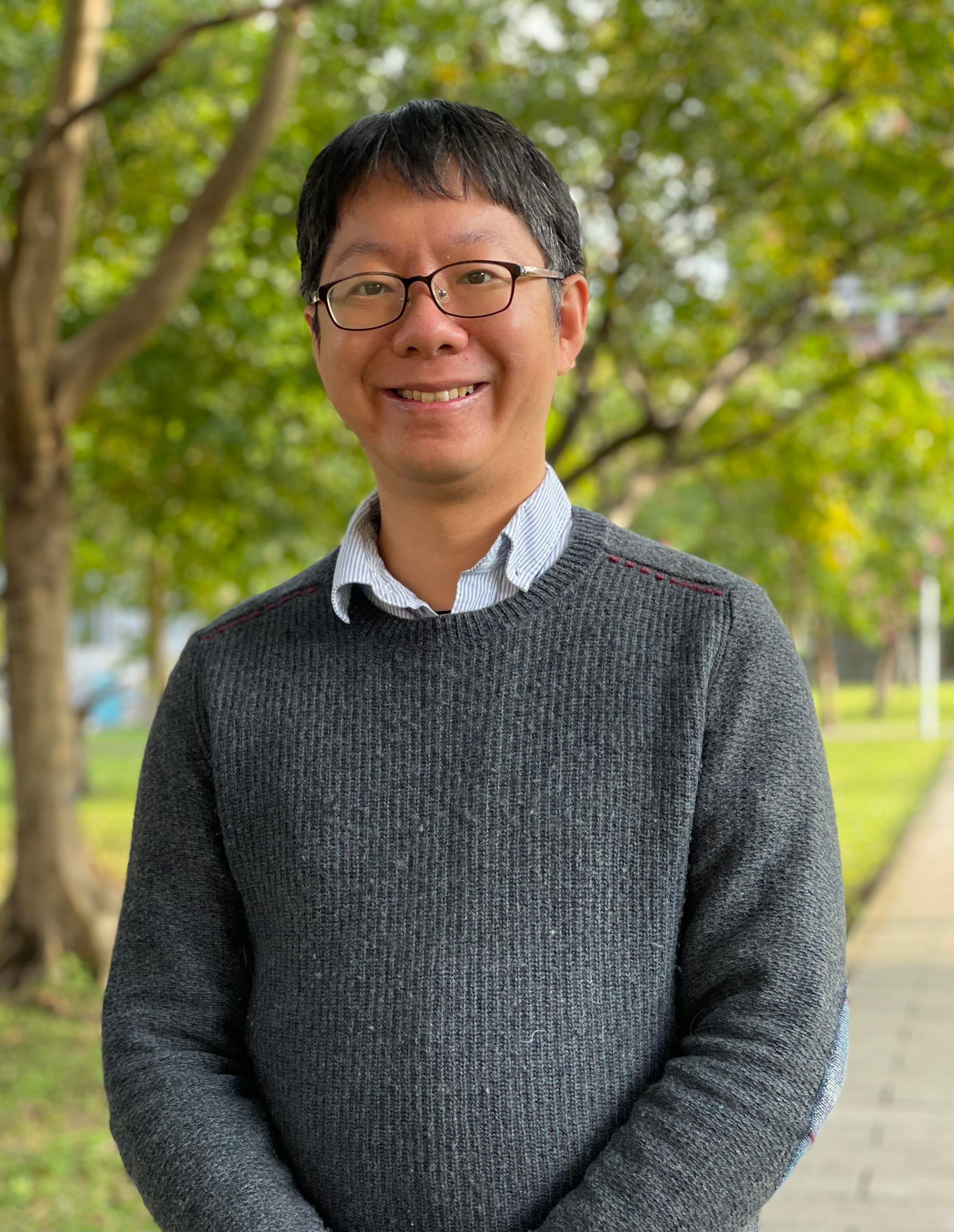
Hsuan-Tien (Tien) Lin
National Taiwan University
Professor Hsuan-Tien Lin received a B.S. in Computer Science and Information Engineering from National Taiwan University in 2001, an M.S. and a Ph.D. in Computer Science from California Institute of Technology in 2005 and 2008, respectively. He joined the Department of Computer Science and Information Engineering at National Taiwan University as an assistant professor in 2008 and has been promoted to full professor in 2017. Between 2016 and 2019, he worked as the Chief Data Scientist of Appier, a startup company that specializes in making AI easier for marketing. Currently, he keeps growing with Appier as its Chief Data Science Consultant. From the university, Prof. Lin received the Distinguished Teaching Awards in 2011 and 2021, the Outstanding Mentoring Award in 2013, and five Outstanding Teaching Awards between 2016 and 2020. He co-authored the introductory machine learning textbook Learning from Data and offered two popular Mandarin-teaching MOOCs Machine Learning Foundations and Machine Learning Techniques based on the textbook. He served in the machine learning community as Progam Co-chair of NeurIPS 2020, Expo Co-chair of ICML 2021, and Workshop Chair of NeurIPS 2022 and 2023. He co-led the teams that won the champion of KDDCup 2010, the double-champion of the two tracks in KDDCup 2011, the champion of track 2 in KDDCup 2012, and the double-champion of the two tracks in KDDCup 2013.
Professor Hsuan-Tien Lin received a B.S. in Computer Science and Information Engineering from National Taiwan University in 2001, an M.S. and a Ph.D. in Computer Science from California Institute of Technology in 2005 and 2008, respectively. He joined the Department of Computer Science and Information Engineering at National Taiwan University as an assistant professor in 2008 and has been promoted to full professor in 2017. Between 2016 and 2019, he worked as the Chief Data Scientist of Appier, a startup company that specializes in making AI easier for marketing. Currently, he keeps growing with Appier as its Chief Data Science Consultant. From the university, Prof. Lin received the Distinguished Teaching Awards in 2011 and 2021, the Outstanding Mentoring Award in 2013, and five Outstanding Teaching Awards between 2016 and 2020. He co-authored the introductory machine learning textbook Learning from Data and offered two popular Mandarin-teaching MOOCs Machine Learning Foundations and Machine Learning Techniques based on the textbook. He served in the machine learning community as Progam Co-chair of NeurIPS 2020, Expo Co-chair of ICML 2021, and Workshop Chair of NeurIPS 2022 and 2023. He co-led the teams that won the champion of KDDCup 2010, the double-champion of the two tracks in KDDCup 2011, the champion of track 2 in KDDCup 2012, and the double-champion of the two tracks in KDDCup 2013.
General Chair
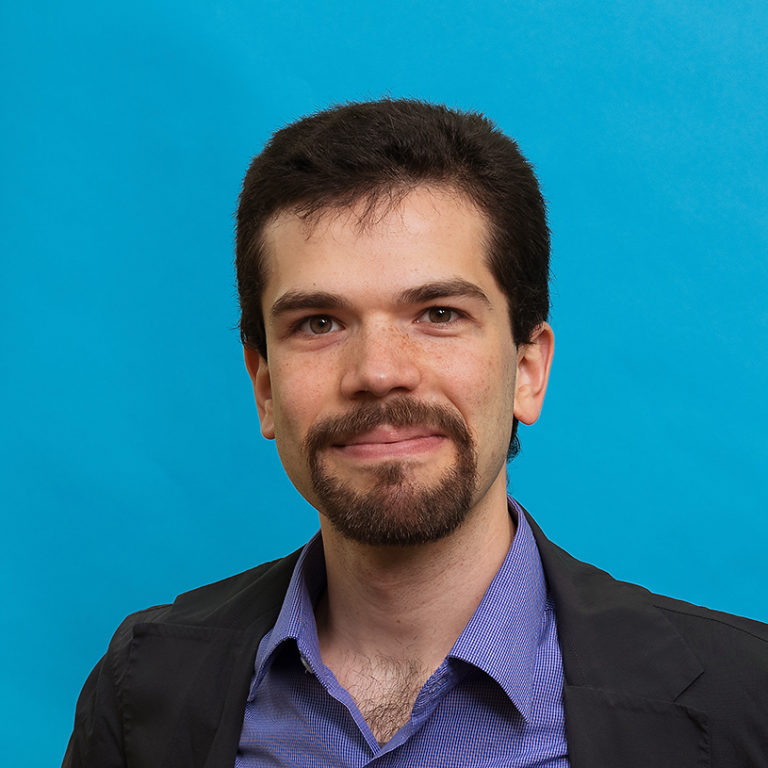
Razvan Pascanu
Google DeepMind, Mila
Atlanta Satellite Chair
Irfan Essa
Georgia Tech & Google
Atlanta Satellite Chair
Mark Riedl
Associate Professor
Georgia Institute of Technology
Paris Satellite Chair
Linus Bleistein
Schneider Electric
Paris Satellite Chair
Olivier Cappé
CNRS
Paris Satellite Chair
Laetitia Chapel
IRISA - Institut Agro
Paris Satellite Chair
Edwige Cyffers
CNRS
Paris Satellite Chair
Rémi Flamary
École Polytechnique, Institut Polytechnique de Paris
Paris Satellite Chair
Pierre Marion
INRIA
Senior Program Chair
Finale Doshi-Velez
Harvard
Program Chair
Marc Deisenroth
Google DeepMind
Program Chair
Nika Haghtalab
University of California, Berkeley
Program Chair
David Rolnick
Assistant Professor
McGill, Mila
David Rolnick is an Associate Professor and Canada CIFAR AI Chair in the School of Computer Science at McGill University and at Mila – Quebec AI Institute. He is a Co-founder and Chair of Climate Change AI and serves as Scientific Co-director of Sustainability in the Digital Age and co-lead of the Global Center on AI and Biodiversity Change (ABC). Dr. Rolnick is a Sloan Research Fellow and an AI2050 Early Career Fellow and was named to the MIT Technology Review’s 2021 list of “35 Innovators Under 35” for his work in building the field of AI and climate change. He received his Ph.D. in Applied Mathematics from MIT and is a former Fulbright Scholar, NSF Graduate Research Fellow, and NSF Mathematical Sciences Postdoctoral Research Fellow.
David Rolnick is an Associate Professor and Canada CIFAR AI Chair in the School of Computer Science at McGill University and at Mila – Quebec AI Institute. He is a Co-founder and Chair of Climate Change AI and serves as Scientific Co-director of Sustainability in the Digital Age and co-lead of the Global Center on AI and Biodiversity Change (ABC). Dr. Rolnick is a Sloan Research Fellow and an AI2050 Early Career Fellow and was named to the MIT Technology Review’s 2021 list of “35 Innovators Under 35” for his work in building the field of AI and climate change. He received his Ph.D. in Applied Mathematics from MIT and is a former Fulbright Scholar, NSF Graduate Research Fellow, and NSF Mathematical Sciences Postdoctoral Research Fellow.
Program Chair
Jenna Wiens
Professor
University of Michigan
Assistant Program Chair
Michael Ito
University of Michigan - Ann Arbor
Assistant Program Chair
Shengpu Tang
Emory University
Assistant Program Chair
Caroline Weis
gsk.ai
Atlanta Satellite Program Chair
Sara Fridovich-Keil
Georgia Tech
Atlanta Satellite Program Chair
Zsolt Kira
Georgia Institute of Techology
Paris Satellite Program Chair
Samuel Kaski
ELLIS Institute Finland
Paris Satellite Program Chair
Lorenzo Rosasco
Università degli Studi di Genova
Senior Workshop Chair
Piotr Koniusz
University of New South Wales (❤UNSW❤)
An Associate Professor in Theoretical ML at the University of New South Wales (UNSW, Sydney). A Principal (now Visiting) Research Scientist in Machine Learning at Data61❤CSIRO and a Honorary Associate Professor at the Australian National University (ANU). Between 2013-2015, he was a postdoctoral researcher in the team LEAR, INRIA, Grenoble. He received his BSc in Telecommunications and Software Engineering in 2004 from the Warsaw University of Technology, Poland, and completed his PhD in Computer Vision in 2013 at CVSSP, University of Surrey, UK. His current interests include contrastive and few-shot learning. He has received awards such as the Sang Uk Lee Best Student Paper Award from ACCV'22, the Runner-up APRS/IAPR Best Student Paper Award from DICTA'22, outstanding Area Chair by ICLR 2021--2023. He has served as a Workshop Program Co-Chair for NeurIPS'23 and WWW'25, and Senior Area Chair for several NeurIPS, ICLR, ICML and AISTATS conferences.
An Associate Professor in Theoretical ML at the University of New South Wales (UNSW, Sydney). A Principal (now Visiting) Research Scientist in Machine Learning at Data61❤CSIRO and a Honorary Associate Professor at the Australian National University (ANU). Between 2013-2015, he was a postdoctoral researcher in the team LEAR, INRIA, Grenoble. He received his BSc in Telecommunications and Software Engineering in 2004 from the Warsaw University of Technology, Poland, and completed his PhD in Computer Vision in 2013 at CVSSP, University of Surrey, UK. His current interests include contrastive and few-shot learning. He has received awards such as the Sang Uk Lee Best Student Paper Award from ACCV'22, the Runner-up APRS/IAPR Best Student Paper Award from DICTA'22, outstanding Area Chair by ICLR 2021--2023. He has served as a Workshop Program Co-Chair for NeurIPS'23 and WWW'25, and Senior Area Chair for several NeurIPS, ICLR, ICML and AISTATS conferences.
Workshop Chair
Khoa D Doan
VinUniversity
Workshop Chair
Theodore Papamarkou
Dr
PolyShape
Theodore Papamarkou is the founder of PolyShape, a startup company with the mission to develop health intelligence for innovative healthcare solutions, while currently holding the title of distinguished professor at Zhejiang Normal University. Prior to his current role, Theodore held the positions of professor in the mathematics of data science at The University of Manchester, of strategic hire in artificial intelligence at the Oak Ridge National Laboratory, and of assistant professor at the University of Glasgow. In early stages of his career, he worked as a post-doctoral researcher at the University of Warwick, at University College London, and at the University of Cambridge. Theodore’s research interests span categorical probabilistic inference, Bayesian deep learning, topological deep learning, and applications of these in biomedical research and healthcare.
Theodore Papamarkou is the founder of PolyShape, a startup company with the mission to develop health intelligence for innovative healthcare solutions, while currently holding the title of distinguished professor at Zhejiang Normal University. Prior to his current role, Theodore held the positions of professor in the mathematics of data science at The University of Manchester, of strategic hire in artificial intelligence at the Oak Ridge National Laboratory, and of assistant professor at the University of Glasgow. In early stages of his career, he worked as a post-doctoral researcher at the University of Warwick, at University College London, and at the University of Cambridge. Theodore’s research interests span categorical probabilistic inference, Bayesian deep learning, topological deep learning, and applications of these in biomedical research and healthcare.
Workshop Chair
Elisa Ricci
University of Trento
Workshop Chair
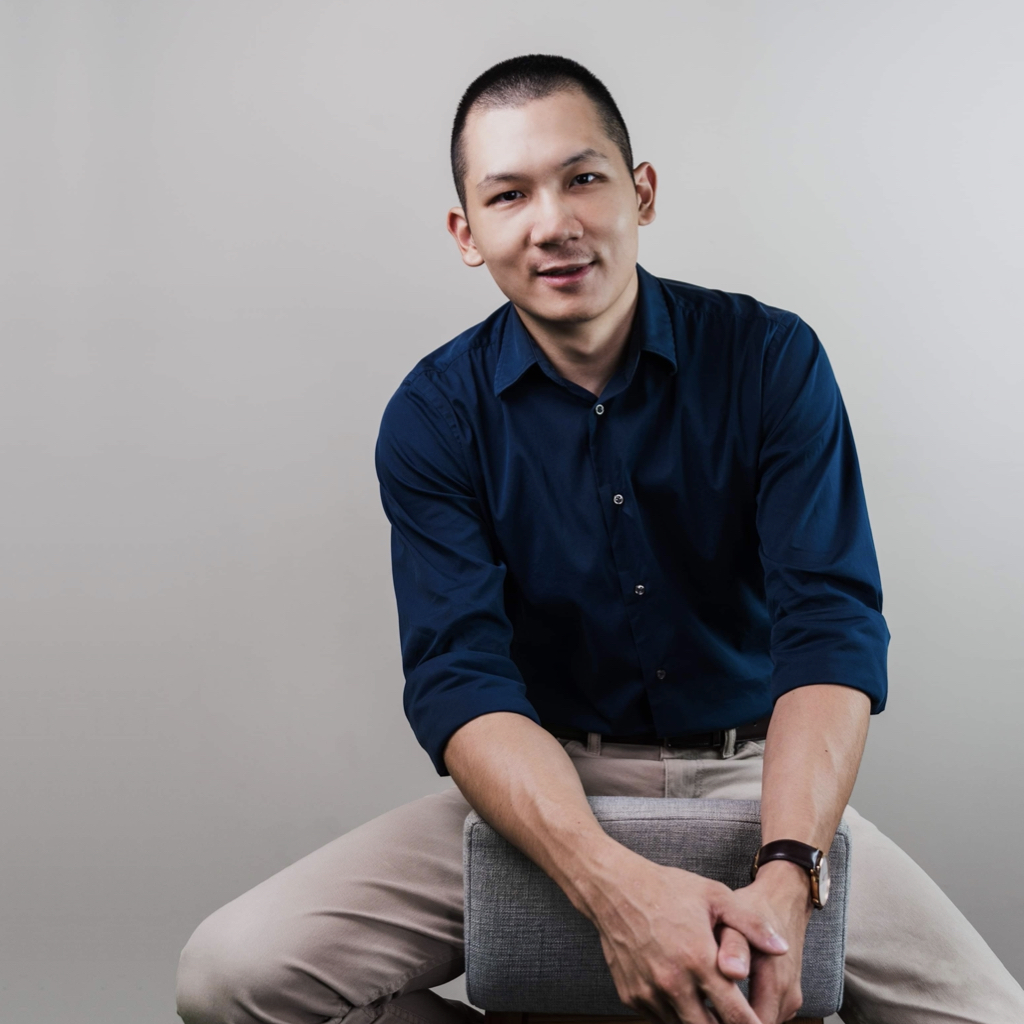
Shao-Hua Sun
National Taiwan University
I am an Assistant Professor at National Taiwan University (NTU) with a joint appointment in the Department of Electrical Engineering and the Graduate Institute of Communication Engineering. Prior to joining NTU, I recently completed my Ph.D. in Computer Science at the University of Southern California. Before that, I received my B.S. degree in Electrical Engineering from NTU. My research interests span Robot Learning, Reinforcement Learning, Robotics, and Program Synthesis.
I am an Assistant Professor at National Taiwan University (NTU) with a joint appointment in the Department of Electrical Engineering and the Graduate Institute of Communication Engineering. Prior to joining NTU, I recently completed my Ph.D. in Computer Science at the University of Southern California. Before that, I received my B.S. degree in Electrical Engineering from NTU. My research interests span Robot Learning, Reinforcement Learning, Robotics, and Program Synthesis.
Workshop Chair
Ghada Zamzmi
Heartflow
Workshop Assistant Chair
Nina Corvelo Benz
Max-Planck Institute of Biochemistry
Workshop Assistant Chair
Junhao Dong
Nanyang Technological University
Tutorial Chair
Quentin Berthet
Research Scientist
Google DeepMind
Tutorial Chair
Matthew Fahrbach
Google
Tutorial Chair
Yingzhen Li
Imperial College London, Nanyang Technological University
Yingzhen Li is a senior researcher at Microsoft Research Cambridge. She received her PhD from the University of Cambridge, and previously she has interned at Disney Research. She is passionate about building reliable machine learning systems, and her approach combines both Bayesian statistics and deep learning. Her contributions to the approximate inference field include: (1) algorithmic advances, such as variational inference with different divergences, combining variational inference with MCMC and approximate inference with implicit distributions; (2) applications of approximate inference, such as uncertainty estimation in Bayesian neural networks and algorithms to train deep generative models. She has served as area chairs at NeurIPS/ICML/ICLR/AISTATS on related research topics, and she is a co-organizer of the AABI2020 symposium, a flagship event of approximate inference.
Yingzhen Li is a senior researcher at Microsoft Research Cambridge. She received her PhD from the University of Cambridge, and previously she has interned at Disney Research. She is passionate about building reliable machine learning systems, and her approach combines both Bayesian statistics and deep learning. Her contributions to the approximate inference field include: (1) algorithmic advances, such as variational inference with different divergences, combining variational inference with MCMC and approximate inference with implicit distributions; (2) applications of approximate inference, such as uncertainty estimation in Bayesian neural networks and algorithms to train deep generative models. She has served as area chairs at NeurIPS/ICML/ICLR/AISTATS on related research topics, and she is a co-organizer of the AABI2020 symposium, a flagship event of approximate inference.
Tutorial Chair
Krikamol Muandet
CISPA Helmholtz Center for Information Security
Krikamol Muandet is currently a Chief Scientist and Tenure-track Faculty Member at CISPA Helmholtz Center for Information Security in Saarbrücken, Germany, where he leads the Rational Intelligence (RI) Lab. He also serves as the Chief Research Officer (CRO) at CiferAI. His research interests span machine learning, causality, economics, learning theory, and their intersections.
Krikamol Muandet is currently a Chief Scientist and Tenure-track Faculty Member at CISPA Helmholtz Center for Information Security in Saarbrücken, Germany, where he leads the Rational Intelligence (RI) Lab. He also serves as the Chief Research Officer (CRO) at CiferAI. His research interests span machine learning, causality, economics, learning theory, and their intersections.
Tutorial Chair
Yisen Wang
Assistant Professor
Peking University
Evaluations and Datasets Track Chair
Alexandre Drouin
Research Scientist
Cohere / Mila
Evaluations and Datasets Track Chair
Konstantina Palla
Spotify
Evaluations and Datasets Track Chair
Jessica Schrouff
Research Scientist
GSK
I am a Director of Responsible AI at GSK since 2025. Previously, I was at Alphabet (Google Research, Google Deepmind) working on trustworthy machine learning for healthcare. Before that, I was a postdoctoral researcher at University College London and Stanford University studying machine learning for neuroscience. My current interests lie at the intersection of trustworthy machine learning and causality.
I am a Director of Responsible AI at GSK since 2025. Previously, I was at Alphabet (Google Research, Google Deepmind) working on trustworthy machine learning for healthcare. Before that, I was a postdoctoral researcher at University College London and Stanford University studying machine learning for neuroscience. My current interests lie at the intersection of trustworthy machine learning and causality.
Evaluations and Datasets Track Chair
Joaquin Vanschoren
Eindhoven University of Technology, Google DeepMind
Evaluations and Datasets Track Chair
Lijun Wu
Ant Group
Evaluations and Datasets Track Assistant Chair
shubham Gupta
MILA
Evaluations and Datasets Track Assistant Chair
prabhant singh
TU Eindhoven
Position Paper Track Chair
Seth Lazar
Johns Hopkins University
Professor in the School of Government and Policy
Professor in the School of Government and Policy
Position Paper Track Chair
Alex X Lu
Microsoft Research
Alex Lu is a Senior Researcher at Microsoft Research New England, in the BioML group. His research focuses on machine learning methods that enable biologists to discover new hypotheses from big biological datasets. Facets of his research program include self-supervised representation learning towards the goal of characterizing previously unknown classes or patterns, foundation models towards the goal of making machine learning accessible to biologists working with more restricted datasets, and robustness and domain generalization to ensure that methods detect biological signal and not technical confounders.
Alex Lu is a Senior Researcher at Microsoft Research New England, in the BioML group. His research focuses on machine learning methods that enable biologists to discover new hypotheses from big biological datasets. Facets of his research program include self-supervised representation learning towards the goal of characterizing previously unknown classes or patterns, foundation models towards the goal of making machine learning accessible to biologists working with more restricted datasets, and robustness and domain generalization to ensure that methods detect biological signal and not technical confounders.
Position Paper Track Chair
David Rügamer
LMU Munich, MCML
Position Paper Track Assistant Chair
Stanley Bryan Hua
University of Toronto
Position Paper Track Assistant Chair
Kathryne Metcalf
UC Berkeley
Position Paper Track Assistant Chair
Theo Murray
Australian National University
Theo is a PhD candidate in Philosophy at the Australian National University, specialising in moral psychology, and research officer at the MINT lab. His doctoral research concerns blame's communicative function, and makes progress on related topics, including blame's epistemic norm, blame's value, and the nature of relationships. This research intersects with existing puzzles in the normative philosophy of computing: how AI agents might be responsible and how they might otherwise fit into our ordinary interpersonal moral practices.
Theo is a PhD candidate in Philosophy at the Australian National University, specialising in moral psychology, and research officer at the MINT lab. His doctoral research concerns blame's communicative function, and makes progress on related topics, including blame's epistemic norm, blame's value, and the nature of relationships. This research intersects with existing puzzles in the normative philosophy of computing: how AI agents might be responsible and how they might otherwise fit into our ordinary interpersonal moral practices.
Next Generation and Accessibility Chair
Ehsan Adeli
Stanford University
Next Generation and Accessibility Chair
Vineeth N Balasubramanian
Microsoft Research India and IIT Hyderabad
Next Generation and Accessibility Chair
Apoorva Beedu
Rivian VW Technology
Next Generation and Accessibility Chair
Ismini Lourentzou
University of Illinois Urbana-Champaign
Next Generation and Accessibility Chair
Nicolas Papadakis
CNRS
Communication Chair
Khimya Khetarpal
Google DeepMind
I am a Senior Research Scientist at Google Deepmind and an Affiliate Faculty Member of (Mila). I earned my Ph.D. in Computer Science from Reasoning and Learning Lab at McGill University and Mila, where I was advised by Doina Precup. I am broadly interested in artificial intelligence and reinforcement learning.
I am a Senior Research Scientist at Google Deepmind and an Affiliate Faculty Member of (Mila). I earned my Ph.D. in Computer Science from Reasoning and Learning Lab at McGill University and Mila, where I was advised by Doina Precup. I am broadly interested in artificial intelligence and reinforcement learning.
Communication Chair
Jean Kossaifi
NVIDIA Research
Jean Kossaifi leads research at NVIDIA in the field of AI for Scientific Simulation, where he advances new algorithmic paradigms to solve complex physics-based problems. His core research focuses on fundamental algorithms, including combining tensor methods with deep learning, to develop efficient and powerful neural architectures. To help democratize advanced computational techniques and accelerate scientific discovery, he created two widely used open-source libraries: TensorLy, for tensor methods, and NeuralOperator, for scientific machine learning. Prior to NVIDIA, Jean was a founding member of the Samsung AI Center in Cambridge. His academic foundation includes a French Engineering Diploma in Mathematics, Computer Science, and Finance and a BSc in advanced mathematics. Jean then completed his PhD in Artificial Intelligence at Imperial College London. For more on his work, including his publications and open-source projects, please visit his personal website and Google Scholar profile.
Jean Kossaifi leads research at NVIDIA in the field of AI for Scientific Simulation, where he advances new algorithmic paradigms to solve complex physics-based problems. His core research focuses on fundamental algorithms, including combining tensor methods with deep learning, to develop efficient and powerful neural architectures. To help democratize advanced computational techniques and accelerate scientific discovery, he created two widely used open-source libraries: TensorLy, for tensor methods, and NeuralOperator, for scientific machine learning. Prior to NVIDIA, Jean was a founding member of the Samsung AI Center in Cambridge. His academic foundation includes a French Engineering Diploma in Mathematics, Computer Science, and Finance and a BSc in advanced mathematics. Jean then completed his PhD in Artificial Intelligence at Imperial College London. For more on his work, including his publications and open-source projects, please visit his personal website and Google Scholar profile.
Communication Chair
Feng Liu
University of Melbourne
Communication Chair
Aadirupa Saha
University of Illinios, Chicago
Research: RL, ML Theory, Optimization
Research: RL, ML Theory, Optimization
Communication Chair
Christian Wolf
Naver Labs Europe
Principal Scientist at Naver Labs Europe, Lead of the Spatial AI team. AI for Robotics, Computer Vision, Machine Learning.
Principal Scientist at Naver Labs Europe, Lead of the Spatial AI team. AI for Robotics, Computer Vision, Machine Learning.
Social Chair
Traian Rebedea
NVIDIA & UPB
Social Chair
Shoujin Wang
University of Technology Sydney
Social Chair
Haneul Yoo
New York University
Haneul Yoo is an Assistant Professor/Faculty Fellow in the Department of Computer Science at the NYU Courant Institute School of Mathematics, Computing, and Data Science. She received her PhD in the School of Computing at KAIST. With a background in machine learning (ML) and natural language processing (NLP), she has worked on (1) developing language models and methods to improve generalization across languages, (2) designing resources and evaluation frameworks for underrepresented languages and cultures, and (3) applying AI to high-stakes domains. She has published papers in major NLP conferences, including ACL, EMNLP, and NAACL, and has been named a Rising Star at KAIST exploreCSR supported by Google. She has served as a Social Chair at NeurIPS 2026 and co-organized the Multilingual and Equitable Language Technologies (MELT) workshop at COLM 2025, the Women in Machine Learning (WiML) symposium at ICML 2026, and the Generative AI for the World (GenAI4World) workshop at COLM 2026.
Haneul Yoo is an Assistant Professor/Faculty Fellow in the Department of Computer Science at the NYU Courant Institute School of Mathematics, Computing, and Data Science. She received her PhD in the School of Computing at KAIST. With a background in machine learning (ML) and natural language processing (NLP), she has worked on (1) developing language models and methods to improve generalization across languages, (2) designing resources and evaluation frameworks for underrepresented languages and cultures, and (3) applying AI to high-stakes domains. She has published papers in major NLP conferences, including ACL, EMNLP, and NAACL, and has been named a Rising Star at KAIST exploreCSR supported by Google. She has served as a Social Chair at NeurIPS 2026 and co-organized the Multilingual and Equitable Language Technologies (MELT) workshop at COLM 2025, the Women in Machine Learning (WiML) symposium at ICML 2026, and the Generative AI for the World (GenAI4World) workshop at COLM 2026.
Ethics Review Chair
Stephanie Hyland
Microsoft Research
Ethics Review Chair
Emanuel Moss
Intel Labs / University of Virginia
Emanuel Moss is a Research Scientist at Intel Labs and a Lecturer at the University of Virginia School of Data Science. He received his Ph.D. from the CUNY Graduate Center, holds an M.A. from Brandeis University, and received his B.A. from the University of Illinois at Urbana-Champaign. His research is broadly concerned with AI and computing, and multidisciplinary approaches to AI evaluation. He has published widely on accountability for computational systems, AI audit and assessment, and organizational approaches to AI adoption. His ongoing work addresses the use of AI in high-precision expert domains. Moss is a recipient of the Wenner Gren Fellowship, is a member of the NIST AI Safety Institute Consortium and the Computing Community Consortium Council, and frequently collaborates with the Sloane Lab at the University of Virginia.
Emanuel Moss is a Research Scientist at Intel Labs and a Lecturer at the University of Virginia School of Data Science. He received his Ph.D. from the CUNY Graduate Center, holds an M.A. from Brandeis University, and received his B.A. from the University of Illinois at Urbana-Champaign. His research is broadly concerned with AI and computing, and multidisciplinary approaches to AI evaluation. He has published widely on accountability for computational systems, AI audit and assessment, and organizational approaches to AI adoption. His ongoing work addresses the use of AI in high-precision expert domains. Moss is a recipient of the Wenner Gren Fellowship, is a member of the NIST AI Safety Institute Consortium and the Computing Community Consortium Council, and frequently collaborates with the Sloane Lab at the University of Virginia.
Ethics Review Chair
Olga Russakovsky
Princeton University
Affinity Chair
Sarthak Arora
Northestern University
Affinity Chair
Celia Cintas
IBM Research Africa
Affinity Chair
Harshita Sahni
University of New Mexico
Affinity Chair
Yachna Sharma
Georgia Institute of Technology Alumni
Creative AI Track Chair
Immanuel Koh
Singapore University of Technology and Design
Immanuel Koh is an Assistant Professor in Design & Artificial Intelligence (DAI) and Architecture & Sustainable Design (ASD) at the Singapore University of Technology & Design (SUTD) where he directs Artificial-Architecture.
Immanuel Koh is an Assistant Professor in Design & Artificial Intelligence (DAI) and Architecture & Sustainable Design (ASD) at the Singapore University of Technology & Design (SUTD) where he directs Artificial-Architecture.
Creative AI Track Chair
Piotr Mirowski
Research Scientist
Google DeepMind
Creative AI Track Chair
Yingtao Tian
Sakana AI
Creative AI Track Assistant Chair
Wei-Yao Wang
Sony
Research scientist on interactive multimodal foundation models ad LLM agents nfor content creation. For more details: https://wywywang.github.io/
Research scientist on interactive multimodal foundation models ad LLM agents nfor content creation. For more details: https://wywywang.github.io/
Creative AI Track Assistant Chair
Tom White
Senior Lecturer
Victoria University of Wellington School of Design
Tom is a New Zealand based artist investigating machine perception. His current work focuses on creating physical artworks that highlight how machines “see” and thus how they think, suggesting that these systems are capable of abstraction and conceptual thinking. He has exhibited computer based artwork internationally over the past 25 years with themes of artificial intelligence, interactivity, and computational creativity. He is currently a lecturer and researcher at University of Wellington School of Design where he teaches students the creative potential of computer programming and artificial intelligence.
Tom is a New Zealand based artist investigating machine perception. His current work focuses on creating physical artworks that highlight how machines “see” and thus how they think, suggesting that these systems are capable of abstraction and conceptual thinking. He has exhibited computer based artwork internationally over the past 25 years with themes of artificial intelligence, interactivity, and computational creativity. He is currently a lecturer and researcher at University of Wellington School of Design where he teaches students the creative potential of computer programming and artificial intelligence.
Journal Track Chair
Masahiro Ikeda
The University of Osaka
Journal Track Chair
Lam Nguyen
IBM Research, Thomas J. Watson Research Center
Lam M. Nguyen is a Staff Research Scientist at IBM Research, Thomas J. Watson Research Center working in the intersection of Optimization and Machine Learning/Deep Learning. He is also the PI of ongoing MIT-IBM Watson AI Lab projects. Dr. Nguyen received his B.S. degree in Applied Mathematics and Computer Science from Lomonosov Moscow State University in 2008; M.B.A. degree from McNeese State University in 2013; and Ph.D. degree in Industrial and Systems Engineering from Lehigh University in 2018. Dr. Nguyen has extensive research experience in optimization for machine learning problems. He has published his work mainly in top AI/ML and Optimization publication venues, including ICML, NeurIPS, ICLR, AAAI, AISTATS, Journal of Machine Learning Research, and Mathematical Programming. He has been serving as an Action/Associate Editor for Journal of Machine Learning Research, Machine Learning, Neural Networks, IEEE Transactions on Neural Networks and Learning Systems, and Journal of Optimization Theory and Applications; an Area Chair for ICML, NeurIPS, ICLR, AAAI, CVPR, UAI, and AISTATS conferences. His current research interests include design and analysis of learning algorithms, optimization for representation learning, dynamical systems for machine learning, federated learning, reinforcement learning, time series, and trustworthy/explainable AI.
Lam M. Nguyen is a Staff Research Scientist at IBM Research, Thomas J. Watson Research Center working in the intersection of Optimization and Machine Learning/Deep Learning. He is also the PI of ongoing MIT-IBM Watson AI Lab projects. Dr. Nguyen received his B.S. degree in Applied Mathematics and Computer Science from Lomonosov Moscow State University in 2008; M.B.A. degree from McNeese State University in 2013; and Ph.D. degree in Industrial and Systems Engineering from Lehigh University in 2018. Dr. Nguyen has extensive research experience in optimization for machine learning problems. He has published his work mainly in top AI/ML and Optimization publication venues, including ICML, NeurIPS, ICLR, AAAI, AISTATS, Journal of Machine Learning Research, and Mathematical Programming. He has been serving as an Action/Associate Editor for Journal of Machine Learning Research, Machine Learning, Neural Networks, IEEE Transactions on Neural Networks and Learning Systems, and Journal of Optimization Theory and Applications; an Area Chair for ICML, NeurIPS, ICLR, AAAI, CVPR, UAI, and AISTATS conferences. His current research interests include design and analysis of learning algorithms, optimization for representation learning, dynamical systems for machine learning, federated learning, reinforcement learning, time series, and trustworthy/explainable AI.
Scientific Integrity Chair
Fei Fang
Carnegie Mellon University
Scientific Integrity Assistant Chair
Chenxin Dai
Carnegie Mellon University
Education Chair
Noam Koenigstein
Tel Aviv University
Education Chair
Daniela Massiceti
Canva Research
Education Chair
Ulrich Paquet
Dr
Google DeepMind; AIMS South Africa
Reproducibility Track Chair
Jessica Forde
Brown University
Reproducibility Track Chair
Koustuv Sinha
FAIR, Meta
Research Scientist at Meta AI NYC. PhD from McGill University / Mila, advised by Dr Joelle Pineau. I primarily work on logical language understanding, systematic generalization, logical graphs and dialog systems.
Research Scientist at Meta AI NYC. PhD from McGill University / Mila, advised by Dr Joelle Pineau. I primarily work on logical language understanding, systematic generalization, logical graphs and dialog systems.
Workflow Chair
Zhenyu (Sherry) Xue
NeurIPS
Competition Chair
Jes Frellsen
Technical University of Denmark
Competition Chair
Shou-De Lin
National Taiwan University
Competition Chair
Annika Reinke
German Cancer Research Center
Experiment Chair
Joydeep Biswas
The University of Texas at Austin
Experiment Chair
Laurent Charlin
Mila
Experiment Assistant Chair
Zichao Hu
University of Texas at Austin
Experiment Assistant Chair
Gaurav Sahu
Unified Sciences & Mila - Quebec AI Institute
Experiment Commitee
Walter Dempsey
Assistant Professor
University of Michigan
Walter Dempsey is an Assistant Professor of Biostatistics and Assistant Research Professor at the Institute for Social Research. His research focuses on statistical methods for digital and mobile health. His current work involves three complementary research themes: (1) experimental design and data analytic methods to inform multi-stage decision making in health; (2) statistical modeling of complex longitudinal and survival data; and (3) statistical modeling of complex relational structures such as interaction networks. In the coming years, he will continue to design and apply novel statistical methodologies to make sense of complex longitudinal, survival, and relational datasets. This work will inform decision making in health by aiding in intervention evaluation and development. Prior to joining, he was a postdoctoral fellow in the Department of Statistics at Harvard University where he worked within the Statistical Reinforcement Learning Lab under the supervision of Susan Murphy. He received his PhD in Statistics at the University of Chicago under the supervision of Peter McCullagh.
Walter Dempsey is an Assistant Professor of Biostatistics and Assistant Research Professor at the Institute for Social Research. His research focuses on statistical methods for digital and mobile health. His current work involves three complementary research themes: (1) experimental design and data analytic methods to inform multi-stage decision making in health; (2) statistical modeling of complex longitudinal and survival data; and (3) statistical modeling of complex relational structures such as interaction networks. In the coming years, he will continue to design and apply novel statistical methodologies to make sense of complex longitudinal, survival, and relational datasets. This work will inform decision making in health by aiding in intervention evaluation and development. Prior to joining, he was a postdoctoral fellow in the Department of Statistics at Harvard University where he worked within the Statistical Reinforcement Learning Lab under the supervision of Susan Murphy. He received his PhD in Statistics at the University of Chicago under the supervision of Peter McCullagh.
Reproducibility Track Committee
Ana Lucic
University of Amsterdam
Assistant professor at the University of Amsterdam
Assistant professor at the University of Amsterdam
Reproducibility Track Committee
Fernando P. Santos
University of Amsterdam