
Explainable AI-based analysis of human pancreas sections detects traits of type 2 diabetes
Abstract
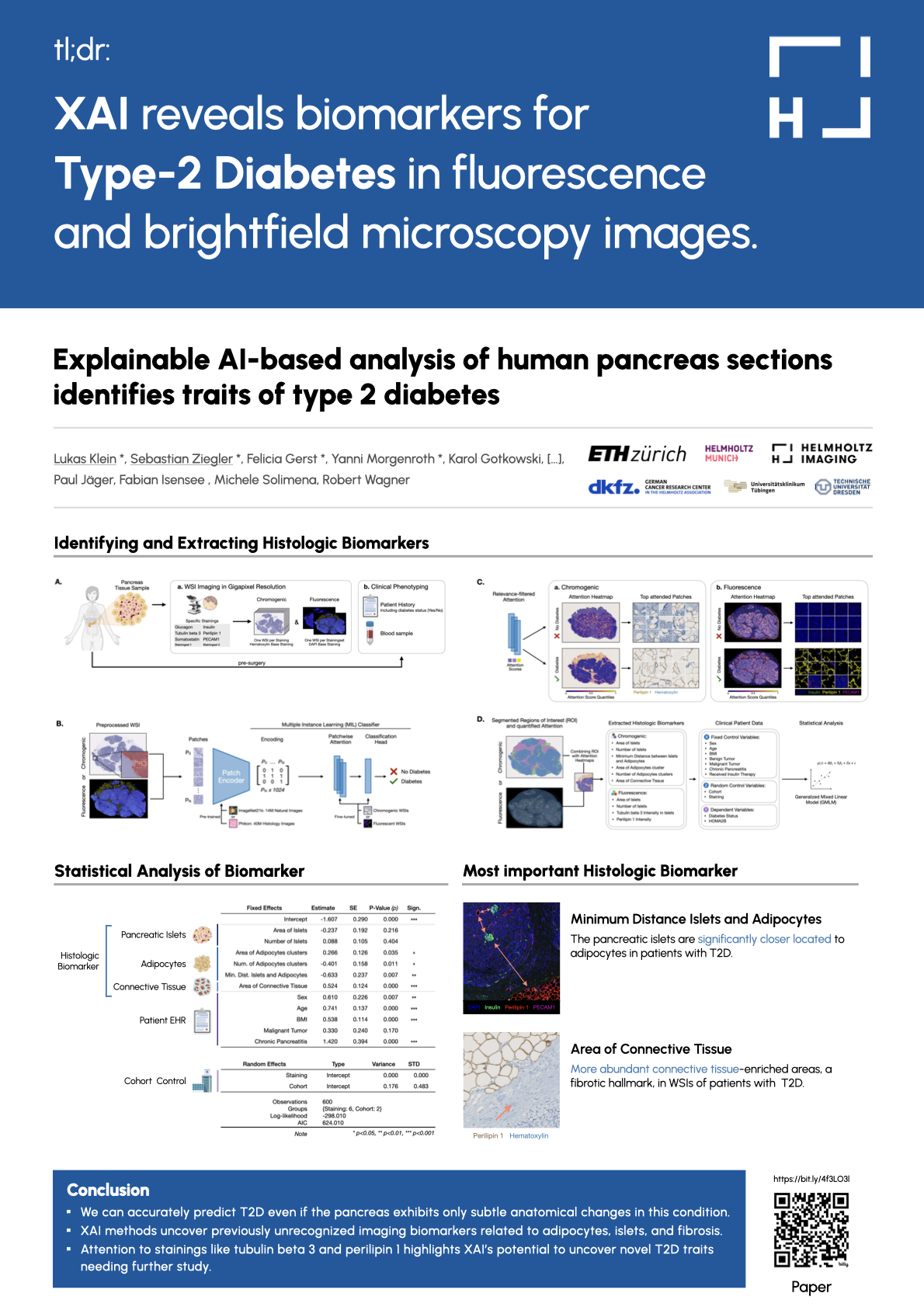
Type 2 diabetes (T2D) is a chronic disease currently affecting around 500 million people worldwide and potentially leading to severe health conditions. Yet, the causes for the underlying beta-cell failure leading to impaired insulin secretion are not fully understood, especially on a morphological level. While giga-pixel microscopy images may visualize such subtle morphological differences, the dimensionality and variability of the data quickly surpass the limits of human analysis.In response, we collected a dataset consisting of pancreas whole-slide images stained with multiple chromogenic and multiplex fluorescent stainings and trained various deep learning models to predict the T2D status. Using explainable AI (XAI) methods, we rendered the learned relationships humanly understandable, quantified them as comprehensive biomarkers, and utilized statistical modeling to assess their association with T2D. Our analysis reveals the contributions of adipocytes, pancreatic islets, and fibrotic patterns to T2D.