
Domain-Adaptive ML for Surface Roughness Predictions in Nuclear Fusion
Abstract
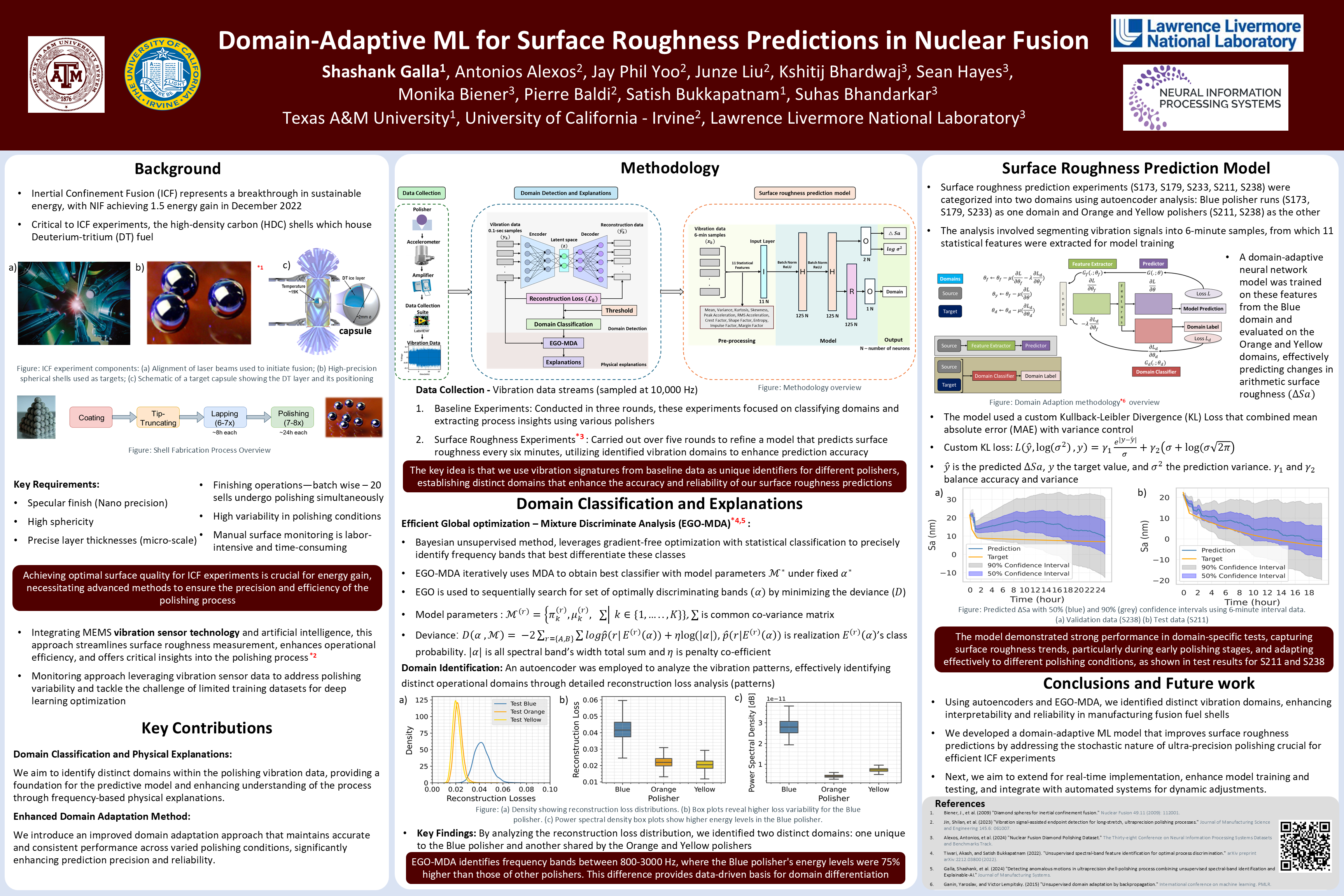
In Inertial Confinement Fusion (ICF) experiments, achieving high surface quality for hydrogen fuel-filled capsules is critical, requiring a meticulous and time-intensive polishing process. Surface roughness measurements, however, is labor-intensive, time-consuming, and reliant on human operators. To automate this evaluation process, we developed domain-adaptive machine learning model that address the variability in polishing conditions and resulting data distributions. Domain classification techniques were first employed to identify distinct polishing domains, which were then used to create a domain adaptation model for accurate surface roughness prediction across varying conditions. This model enables real-time generation of surface roughness predictions, allowing operators to make adjustments during polishing to achieve optimal results. Our methodology has demonstrated its effectiveness in adapting to different data domains while maintaining consistent performance. Furthermore, we provide physics-based explanations for the emergence of specific domains, enhancing the interpretability of the process.