Skip to yearly menu bar Skip to main content


Atlanta Invited Talk Dec 10, 1:00 AM - 2:00 AM AEDT Hall C3

Physical AI: Technology, Trust, and How Not to Lose Your Cool

Ayanna Howard
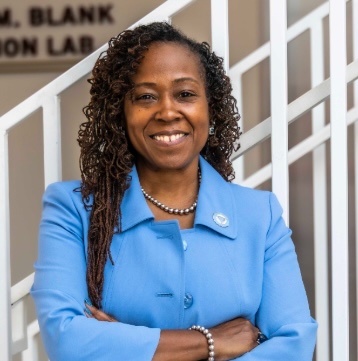
Dr. Ayanna Howard is a renowned roboticist, artificial intelligence pioneer, entrepreneur, and higher education leader who serves as the 12th president of Spelman College, the nation's top-ranked historically Black college or university (HBCU). Widely recognized for her contributions to robotics, artificial intelligence, and human-centered technology, Howard has spent her career advancing innovation while expanding opportunities for future generations of students, researchers, and leaders. Her work spans academia, government, industry, and entrepreneurship, positioning her as a leading voice on the intersection of technology, education, and societal impact. Dr. Howard served as dean of The Ohio State University College of Engineering, one of the largest engineering colleges in the nation, where she oversaw strategic initiatives focused on student success, research excellence, innovation, and workforce development. Prior to Ohio State, she served as chair of the School of Interactive Computing at the Georgia Institute of Technology and founded the Human-Automation Systems Lab, a research group focused on developing intelligent systems that enhance the capabilities of humans and machines. Howard began her career at NASA's Jet Propulsion Laboratory, where she held multiple leadership and research positions, including senior robotics researcher and deputy manager in the Office of the Chief Scientist. Her work contributed to the development of autonomous robotic systems and next-generation technologies designed to operate in complex and challenging environments. A passionate advocate for expanding access to STEM education and leadership opportunities, Howard co-founded Zyrobotics, a company focused on creating educational and therapeutic technologies for children with special needs, and is a co-founder of Black in Robotics, an organization dedicated to increasing representation and opportunity within the robotics profession. Throughout her career, Howard has worked to create pathways for women, underrepresented communities, and future innovators to thrive in science, technology, engineering, and mathematics. She is a lifetime member of Delta Sigma Theta Sorority, Inc. and has championed initiatives focused on mentorship, educational access, and leadership development. Howard's achievements have earned national and international recognition. She has been named to Forbes' America's Top 50 Women in Tech and has been elected to the American Academy of Arts and Sciences, the American Association for the Advancement of Science, and the National Academy of Inventors. She currently serves on the boards of Autodesk and Motorola Solutions and is widely sought after as a speaker and thought leader on the future of technology, artificial intelligence, leadership, and education.
Dr. Howard has been at the forefront of AI and robotics for most of her career. At 27, Dr. Ayanna Howard was hired by NASA to lead a team designing a robot for future Mars exploration missions that could “think like a human and adapt to change.” Her accomplishments since then include being named as one of Business Insider’s most powerful women engineers in the world and as one of Forbes’ U.S. Top 50 Women in Tech. She finds that there is both hope and fear regarding the advancements of physical AI (i.e. robots) - will they be our closest partners, or a threat to our jobs, safety, and well-being? In this talk inspired by her new book “Rebooting the Machines,” Dr. Howard will delve into the impacts AI and robotics will have on our society and what responsibility technologists have for mitigating its disruption. She will focus on physical AI as an element in the future of work and explain the critical importance of ensuring inclusion at all stages of development so intelligent systems are designed to be accessible to all.
View full details
Atlanta Invited Talk Dec 11, 1:00 AM - 2:00 AM AEDT

Stephanie Jegelka

Stefanie Jegelka
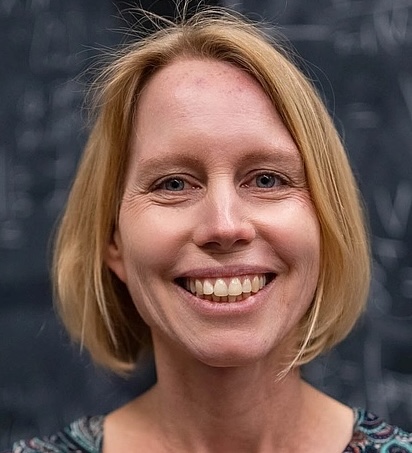
Stefanie Jegelka is a Humboldt Professor of AI at TU Munich. Before that, she was a tenured professor in the EECS Department at MIT, and a member of the Computer Science and AI Lab (CSAIL) and Institute for Data, Systems and Society (IDSS) at MIT. She did a postdoc at UC Berkeley and obtained her PhD from ETH Zurich and the Max Planck Institute for Intelligent Systems. Her research has spanned topics including learning for discrete and combinatorial objects, and understanding representational and computational structure from perspectives such as geometry, graphs and algorithms. Stefanie has received awards including a Humboldt professorship, a Sloan Research Fellowship, an NSF CAREER Award, a DARPA Young Faculty Award, the German Pattern Recognition Award, a Best Paper Award at ICML, the Frank E. Perkins Award for Excellence in Graduate Advising at MIT, and an invited sectional lecture at the International Congress of Mathematicians. She has co-organized multiple workshops on (discrete) optimization in machine learning, graph representation learning, geometry and weight space learning and other related topics, and served as a program chair of ICML 2022.
View full details
Atlanta Invited Talk Dec 12, 1:00 AM - 2:00 AM AEDT Hall C3

Power to the People? Why AI Data Centers Face Growing Resistance, and How We Can Do Better

Sasha Luccioni
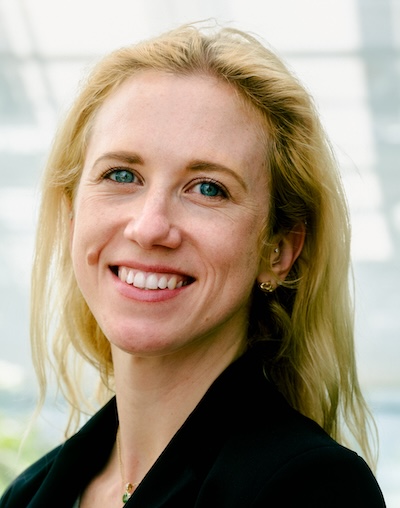
Dr. Sasha Luccioni is a leading scientist at the nexus of artificial intelligence, ethics, and sustainability, with a PhD in AI and a decade of research and industry expertise. She is the Co-Founder and Chief Scientific Officer at Sustainable AI Group, a research and advisory firm helping enterprises measure, compare, and act on the environmental impacts of AI. In recent years, Dr. Luccioni's work was recognized by TIME Magazine's 100 most influential people in AI and by Business Insider on its 2024 AI Power List.
For a technology that is set to revolutionize our society, AI has been receiving a lot of pushback - from protests on the streets of India to the booing of AI CEOs on college commencement stages in the United States. AI data centers have become a central part of this resistance which, in some cases, has escalated, with anti-AI activists throwing acid on a data centre in Amsterdam and vandalizing an AI research institute in Montreal. Numerous jurisdictions, from cities like San Francisco to states like New York, have temporarily halted the construction of data centers as they grapple with citizen pushback, permitting and strain on local resources and energy grids. In my talk, I’ll explore why AI data centers have received so much opposition, what we know about their impacts on local communities, energy grids and the environment, and how we can collectively work to make them better.
View full details

No Events Found

Try adjusting your search terms